


Descriptions:
Video Description
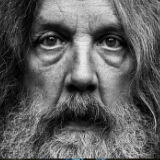
In this Alan Moore interview, the celebrated writer and occultist draws a direct line between Writing and Magic, observing that both are acts of summoning something from the silence of the mind into physical form. He credits Aleister Crowley with a decisive insight: a Grimoire is another spelling of grammar, and to cast a spell is simply to spell — one more way language makes things happen. The conversation moves from the theology of scribe-gods toward a careful account of consciousness as a place, an idea space with its own geography, and ultimately to a definition of creation itself as a magical act.
Synopsis:
– Alan Moore begins by saying his researches into magic and the Occult showed him how closely magic resembles fiction and fantasy.
– The point sharpens with Aleister Crowley: the language of magic is more about language than it is about magic.
– A grimoire, a dark book of spells, is introduced — and Moore reveals it is simply another spelling of grammar.
– “To cast a spell is simply to spell” — the central pun that binds Writing to Magic.
– Across cultures, the gods of magic are also the scribe gods, the gods of writing.
– Moore explains his own entry into magic grew out of his life as a writer and the territory writing opens.
– A writer at work touches states of mind that have no other compartment in ordinary life.
– Technique, he suggests, changes the relationship between fiction and reality.
– The conversation turns to how fictions and realities interpenetrate.
– The chair in the room is real, but the idea of a chair is perhaps more important than any single chair.
– Ideas begin to appear as a separate order of reality, more durable than their material instances.
– Moore approaches the problem of consciousness — the difficulty of proving or disbelieving it.
– Consciousness and Awareness are described as a ghost in the machine, a phrase borrowed from Koestler.
– He seeks a new way of talking about consciousness, one less trapped in mechanical metaphor.
– Consciousness is imagined as a world, a Space with its own rules — not unlike the physical space we inhabit.
– The physical space we move through is contrasted with this Inner Space of ideas.
– Moore proposes to define consciousness in spatial terms.
– Plato’s world of ideal forms appears as an early version of the same insight.
– Carl Jung’s mass unconscious is offered as another map of this idea space.
– Ideas become real mechanisms, sizable forces in the world of thought even when unseen.
– Moore names this shared region “Idea Space.”
– Each person also has a private area of consciousness within that larger field.
– The deeper areas of consciousness follow their own rules, and it is in this territory that magic operates.
– Moore states plainly: Magic means what everybody means by magic.
– He includes any thought or work of art that demonstrably begins nowhere.
– Creation starts in the silence of the mind.
– The arc is traced: no idea, then the flickering of an idea, then a fully realised idea.
– Finally there is a physical artefact — a book, a painting, a made thing.
– “This to me is a magical act” — the definition crystallizes.
– “Any act of creation is a magical act” — the thesis of the whole interview.
– Moore says most of his magical thinking happens when he is writing.
– If something from that realm can be turned into a piece of writing, it becomes shareable.
– Sharing information from that inner realm is described as part of what a magician does.
– The Magician acts as a travel guide into the geography of memory and imagination.





























 Source: Robert Farmer