


Descriptions:
Video Description
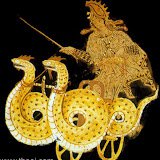
This lesson opens with a line of real Greek that claims not even Ares stands against necessity. The name is Anankē (Ἀνάγκη), and Ammon Hillman hands Madalena the Theoi entry for her: a primordial, winged, serpentine being who embraces the cosmos and can never be escaped. Her mate is Chronos (Χρόνος), and her children include Chaos, Aether, and Phanes. The lesson points out that Adrasteia (Ἀδράστεια), the inescapable, is another of her names.
The grammar then turns to the three most common -mi verbs: didōmi (δίδωμι), to give, tithēmi (τίθημι), to put, and histēmi (ἵστημι), to stand. The student reads the vowel changes across the forms, from didōmi in the singular to didomen in the plural, and compounds like apodidōmi (ἀποδίδωμι), to give back, and kathistēmi (καθίστημι), to establish. Hillman’s advice is to look things up in the lexicon for forms that look strange rather than spin on them.
The reading section closes on a fragment from the Bacchae: women are called to enter the state, and the maddened bakke (βάκκη), the female worshiper of Dionysus, is the one to whom the man caught in the net will come, and whose death will give justice. The hour ends with fear clauses, where phobeomai (φοβέομαι), I fear, takes mē (μή), lest or that, and the mood shifts with the sequence, a small piece of the machinery that Greek refuses to make easy.
Full Video Transcript
I can hear you so we’re having some problems there all right so thanks for coming last
last uh segment like that I thought that worked out well oh I think you’re muted now I can’t hear
you my bad uh yeah it was fun good good is it fun or is it work to go
yeah it’s intimidating is it intimidating because because there’s there’s people watching you right
yeah yeah the people are watching you that’s a factor we’re gonna have to consider when we look
back on this and say okay how did the how did the four week turn out um yeah for sure we’re gonna
have to consider the fact that you were under observation right do you think this would be
any different if it was if it was uh say it was local and i was teaching you in a classroom and
it just so happened that everybody else dropped the course but you um
would it would you think you’d be more comfortable with that or would that affect
your performance i guess is what i’m saying probably and maybe it’s like also i don’t know
yeah i feel like um they’d probably be like way more chill a lot less stress that maybe but i do
like the the aspect of the accountability like people are watching in a way like that are
they’re supportive you know that we’re women we’re all learning together in the classroom so it’s
i try to just try it to not worry about that that’s what i liked about what you said was
when you said that people were holding you accountable i thought oh that’s really good
so that’s that’s the benefit you get out of people watching you as they hold you accountable
right maybe that’s i don’t know does that outweigh any sort of need for privacy maybe i don’t know
what do you think i think it’s half and half you know yeah i mean there’s benefits to both
what’s your opinion of herodotus or just get tell me that i don’t know if you were able to see it
because i know you were putting kids down yeah um i saw some of it i thought that was really
interesting um the the whole first um documentation of history being that is uh is really wild
yeah it is it’s scary isn’t it the it’s scary i mean why didn’t they have like why didn’t he
start with like uh this is how they built the pyramids or something you know right right yeah
you’d think it’d be more wholesome yeah yeah they could have had something better no he starts off
with you know which because that’s how important it was all the epics before homer are medea’s
epics so we already know about this world and the thing is if you look at all of those
girls because that’s really what they are they’re not adult women yet and if you look at them
they’re all part of that echidnaic priesthood each one of them is and yeah so it’s absolutely
gorgeous ios christed the escalus tells us i was christed i should have said that tonight
oh god yeah oh did you have a picture of her christian oh fantastic fantastic and she’s raving
what did you think about the lysis the place that a woman can take her brain where she’s beyond
and oracular i think that’s what is the oracular i think that’s what the yeah you know definitely
yeah i love that uh i think it’s yeah part of our uh our nature yeah to be able to do that
what about it though that because they look at it as a dissolution like you’re totally broken up
it’s like projecting out from your physical self yeah i wonder what’s going on in the brain like
what is the you know what are they doing here’s a culture that has developed a tech around this
process that’s a biological process that some kind of it’s it’s only biological but it’s
um visionary so it be it’s spiritual yeah yeah it’s utilizing sound and and it’s and it’s used
it’s using ritual and it’s a there’s a lot of aspects it’s like sexual too and i don’t know
it’s so then innately it’s involving the nervous system and the uh the emotions and you know song
obviously and there’s a lot of elements i wonder when you when you mention the song i wonder if
there’s some kind of if if it is some kind of brain thing that women are undergoing that allows
them to make some kind of transition what does the music do like is that what’s setting their
mind is that is they’re going through this experience is that how they can get there
right um it’s not because and like a space of hypnosis right something like that right which
is not male that’s that’s not male at all right there’s no music coming out of the
inseminator it’s not it’s not making music you know what i mean so um it’s a really
when you read the technical side of what they’re doing and the drugs and everything they’re putting
together and what how they’re being used oh my god i everything i read today was dirty i just put in
i put in like dick and christ and oh my god i thought i had seen a lot but now it’s just like
oh jesus these people fantastic did you get a chance to reach unit 12. um yeah i i read through
it i saw how it’s kind of adding on to um to like the the verbi’s and uh oh yeah so like the the
endings being me and then all the endings that can change based on that yeah yeah so what did
you think what did you think about i thought you said verbi you said verb me right i thought you
yeah i thought have you started drinking what’s going on no um before we get to the
workout can we warm up with some actual greek and just take our time and actually look at it
now did you get a chance to look at any of the readings yeah i did i did like the first three
first three fantastic um which one do you feel best about let’s start with that one um we could
do the the uh maybe oh the first and second one are are fairly the same level of easiness so we
could start with the first one excellent yeah um so i i put um against necessity no no read
read the read the greek for me i’m sorry yes rose tain and now again who it is on these
tatai um against necessity not even aries can stand against what do you think about that
we we talked about uh yesterday who necessity was and yeah i don’t know a lot of context about it
but notice that she’s capitalized here i mean you’ve got her definition ananke below and they
tell you necessity but notice notice the editors know that this is a woman not a concept right
right aries cannot stand against ananki it makes you want to figure out who she is doesn’t it no
i don’t know who she is i mean aside from um what what you told me yesterday yeah watch this
here i want to show you a tool um type in theoi after any name of any god and use this um you
probably seen this date this what do you call this the site yeah um look she’s the primordial goddess
of necessity compulsion inevitably okay that’s kind of sanitary in the orphan cosmogony she
emerged self-formed at the dawn of creation an incorporeal that’s important incorporeal
non-bodied serpentine being
yeah okay she they talk about her embracing the cosmos do you understand who’s her mate kronos
all right entwining of their coils etc etc now the really good thing here’s a nice picture of her
she’s the winged notice that she’s winged she’s got the winged uh she’s got the wings those are
going to be golden okay have you ever seen the serpent with the wings right you can’t fight you
can’t fight against it you can’t fight against it boom look at the here her parents right look at
gaia oh guy is there right that’s the one that you really have to consider who draws sure what
What is hudros?
Remember here?
Look at it in the Greek.
Now you can read this.
Primordial waters.
Yes.
He’s the wetness, Galen says.
Right?
The wetness of the world.
You have to have wetness or you don’t get seed.
Right?
That’s the way it works.
I mean, this is the basic science.
Are you stupid?
Right?
That’s Galen.
That’s his attitude.
Right?
Right?
so here she is here she is and this is how this site works let me take you
back to ananke you’re gonna have look at her children oh look at her children
chaos ether and fanny’s the visible invisible one right yeah if she is the mother of the moirai
right? Who is she, right? Is she Black Knight? Is she the echidnaic mother? Yes, absolutely,
right? So, look, what do they call her? They call her Adrastea here, right? Isn’t that nice?
Adrastea. You can’t get by her. You can’t get by her, right? She is inescapable.
in i love that what is who is this woman whose arms embrace the cosmos who is inescapable
i love it okay let’s go back to the reality of our workout so that right now we don’t want to
do that look at a non-k look at a non-k there and now realize that not even aries not even aries
wow i think that’s impressive don’t you yeah you do you sound distracted did i lose you for a
second no no are you sure yeah i’m yeah i’m here okay good good here okay chewy i got it leave me
with the thing and go take care of the snakes thank you for the help how about euripides
bakai you did that one right and by the way yeah beautiful translation um yeah i did this one i
i’m not sure that i did it right but um you want me to do it yeah go ahead and read it in greek
okay then i kiss and there is bolon cause these that they hick say they baka bakas
women men uh oh yeah i didn’t understand how to how to do the first line but um
into nets put yourself into a state and then bakas will come where death gives justice yeah let’s
just smooth it out a little bit this is from the bakai and i’m going to show you the beginning at
the end of the workout today i’m going to show you the beginning of the bakai um gunaikis let’s
just go slowly there’s no reason to okay kunai kiss hmm that damn thing could be a nominative
or it could be evocative right yeah okay so i want you to consider that let’s just look at structure
that’s a nominative so there’s our subject in the next clause then we get a prepositional phrase
is s is ace is ace did they tell you that yeah they tell you that in the notes right and what
is a polos what is a polos some some kind of net for you know like hunting yeah and then we get
our verb and this is a very common one kathista kathista me look at kathista me below it’s a me
verb that’s why they’re giving you practice with it right yeah no appoint establish yeah
to put into a state to be established to be appointed to enter into a state
hey ladies yeah the ladies into the state the women right hey ladies right they’re there in
other words these women have been to that place they’ve been through laeus they’ve been through
the one who breaks down they’ve been through the um they found aphrodite isn’t that interesting
and what are they doing he’s addressing them there you know hey ladies
the dude is established in a net the dude is caught in a net right this is pentheus they’re
talking about they’re gonna kill him right eventually they’re gonna kill him because
that’s what women do who have been there they come back with a state state of justice that
causes them to murder isn’t that nice yeah a bache a bache in the vocabulary they give us
their bache baches is a bachan they say right look they don’t even really translate it but
they tell you it’s a maddened woman worshiper of dionysus emphasis on the maddened yeah
yeah he will come to the bachan women whose death or whose death will give
will give justice you see what bachan women do they kill people oh god but it’s only bad people
yeah could you put yourself into a maddened state where you could serve justice by ripping off the
heads of bad people yeah i think that would see and it’s a thing that you can’t be you can only
be a woman notice that it’s women i’m not making this up look it’s bakke right it’s feminine it’s
fucking feminine right that’s you Bacchus yeah Bacchus Bacchus is you that’s the point
that woman who is maddened she’s the worshiper and she is the god right and the god has the
power to do what to execute justice to bring justice Anonke Anonke pushes the cosmos to
justice isn’t that gorgeous i mean why else would you why else would you not notice all of these
gods the fates right even the furies the furies what do they do they chase down the fucking
murderers right that’s what the furies do so i mean these bakken women are in a state of of mania
that i don’t know i’ve never seen it i don’t know i’ve known a lot of women in my time never seen
one enter the bachic state would you like to enter the bachic state i’ve i’m sure i i have
fantastic now now you gotta lead the chorus okay let’s look at uh vocabulary see if we can go
anywhere with this 351. okay all right lay long one another reciprocal reciprocal pronoun and uh
prefix meaning up or up to grapheus grapheus writer painter graphike graphike is writing
painting deca 10 the demiorgos demiorgo a skilled workman let’s look at grapheus and graphike first
notice the root notice the roots the same it’s just the suffix eus or ek right um i think that
i think i’m gonna limit that to the a on the end it’s better it’s more like eus and a which
the a by itself the eta indicates an abstract right a thing whereas the eus whenever you put
eus on something it means one who does whatever that root is so i just want you to recognize
those suffixes and how they’re how you know how they’re kind of you’re gonna see patterns i want
you to get used to seeing patterns yeah deca ten nice and the dami ergos is that workman
ah yeah i don’t want to get into the platonic stuff right now but okay okay okay how about
the verb did on me saying give me those parts did on me did those uh those they caught me
yeah to give it’s a very common verb and it’s one of its compounds is right underneath that apple
did on me yeah to give back to give back yeah okay okay i see how the oppo is working yeah
middle look how it’s used in its middle voice to give back for yourself is to sell yeah that’s
great yeah there you go that’s funny keep going what is the next one another numeral i love the
numerals in any uh any um nine yes what is the most famous ennead the nine-figured ennead in
antiquity who is the most famous ennead i don’t know the muses nine muses right now there were
different numbers of muses at different times but that one became kind of canonical anyway keep
going epos epus word uh or in plural sometimes epic poetry air to me air to me news
interpreter yes one who interprets hermeneus now those morons yeah yeah right yeah you got the
the rough breathing good um the a was on the end of it is the one who does that right so who is the
one who interprets well it’s the interpreter who’s the translator right okay fine but now those people
west west half and those people talking about hermeneutics they don’t even know they don’t
even recognize where this stuff is coming from so anyway so what’s a zografos painter
yeah but what does the word mean so graphos so so graphos uh animal drawer yeah yeah that’s so nice
um a living drawer drawer of the depiction of the living life yeah yeah if you say animals
animals is okay because it is but in that sense we are animals too we’re we’re living so the
living writer what do you do you is that what painters do they bring the living into
what yeah some of these baffle me right some of the etymologies and the greeks would sit around
and talk about the etymone right what is the origin what is the real meaning of this word
right they came up with etymology and everybody’s like oh romans are so smart no they’re not
actually yeah then we get another me verb histami go ahead and say those um principal parts
Yeah, so actively when you stand something up, right, as opposed to you can use it middle
or in an intransitive way, just to stand, right, to be there standing.
so it’s you can think of stand when you think of histamine think of stand the only problem is
histamine occurs a lot by itself but it also occurs a shit ton as compounds like the one
underneath it off histamine you know what that is that’s a oppo plus histamine when you put oppo
and histamine together they say we don’t like when two vowels come together take off the omicron
then you get op histami so when you get op histami the p with the puff of air on the histami
turns into a fistami turns into a fee is isn’t that clever yeah yeah that’s cool revolt revolt
revolt yeah okay cool and then underneath that you have kath histami again it’s kata plus histami
take out the alpha the tau turns into a theta cathistami isn’t that cool the tau transforms
yeah wow into a theta stay so this is a car testing oh yeah
yeah yeah to appoint establish put into a state oh god look at how much this can mean
just think establish establish kathistemi right kathistemi is to stand something up kata which
you can see is the prefix above it means down against or it just strengthens the meaning of
the verb like really set down to really set down is to establish something yeah yeah if you
understand how their mind is working it out it makes it kind of makes more sense kataluo is to
destroy or dissolve catalysis now why do you want to be dissolved is that what we live for to be
dissolved is that is that a woman uh thing that that’s the reality of life is your dissolution
and men never figure it out they just go around squirting things right like oh god it’s it’s the
way they look at it is just kind of i don’t know kind of makes me embarrassed to be a dude
monos mone monon please notice that that’s alone yeah right you can see the mono root there
who day is not who day is not potent is from what place from one place yeah
interrogatives these are all interrogatives those are questions who
where who there right right Oh God what’s going on it’s those accents look
at pros there’s a beautiful preposition with the genitive means in the eyes of or in the name of
with the date of it means near and with an accusative it means toward you’re going to see
this mostly with the accusative of this is motion expressing motion toward right but every once in
a while they’re going to purposely just throw in it throw in its use with a genitive which is pretty
rare so you got to remember something like in the name of right just remember that when you
cross plus um notice that cross as a prefix then goes to its basic against or to so it’s motion
cross is motion heavy soon is accompaniment it’s a preposition that involves accompaniment
so its prefix just means together or with so think of the words synthesis is just something
that you put together and it’s from that prefix soon right plus tithami tithami is that next me
verb which is so common so common tithami say so ethica tithica tithami meaning to put
to put or place put or place i wish they would have put place there as well
The next verb, phileo. Look at that one. Give me the principle for it.
Phileo, phileso, ephilesa, pephileka, pephilemae, ephilesin.
And what does it mean to love?
You know this little game we play where I ask you what the word means to you
and then we figure out what it means to the Greek.
So what does love mean to you?
well uh uh adoration worship appreciation yeah maybe okay we’ll we’ll try that that’s your
definition what does it mean to them this type of love love regard with affection look at halfway
down this paragraph you see right here notice its opposite is me sane me saying means me saying means
to hate right it means to hate so this is the love that is the opposite of hate okay i think i
understand that right okay but look it has a special relationship with sexual love it’s got
a special we’ll learn it as we go as we look at it look at number two to treat affectionately or
kindly it’s getting closer to what you were saying love is to treat affectionately so when
you welcome somebody to your home, you can see in the Odyssey they do this, right? You exchange
philema. Let me give you philema. If I were there, I would kiss your cheeks and you would welcome me
into your home and wash my hands. Isn’t that nice? Right? Because nobody wants a guest with dirty
fucking hands. Treat affectionately. Philema. Kiss on the cheek. Greetings. Okay. But look,
this same philema right can be applied to the love of a dude for his wife and they give you
a specific example and they translate it cherish so there it’s closer to your adoration right
because he’s he’s really adoring her yeah and then they throw then they throw us a curveball
at the same time it’s just sexual intercourse yeah so i can show outward signs of love like
we’re talking about with a kiss of a guest right but i can also just be on your side i can approve
or like you so okay there’s a little bit of bending here that can happen with the verb so
does that help you at all does that help you at all to have to process you’re gonna have you’re
gonna have to see in what context it’s used and if you’re talking about a husband a husband a wife
maybe you’re gonna bend toward that sexuality as opposed to an affection right it’s
it’s quite a spectrum isn’t it i mean it yeah i think it’s i think it works
oh no where’d my am i sharing yeah i’m sharing where’s the text oh chewy there there we go okay
um and then phobeomai underneath that to fear and surprise surprise phobeomai is
exactly what you would think it is when you say fear in english that’s phobia
yeah phobia yes yes now what is a dami ergos they tell you on this note the noun dami ergos
is a skilled workman well what is that exactly it’s a compound damios right having to do with
public or the deem the people right and air gone yeah air gone the work right it means a person
skilled enough to be a professional and can be applied to any craft including and you’ll notice
this is all bronze age stuff because we’re gone where gone is a bronze age word these are bronze
workers surprise right no you shouldn’t but you may be surprised that it’s also sculptors and
doctors doctors yeah so in some cosmologies there’s a damy urgos or damy huelgos the creator
of the world. Welcome to Enonke. Oh, God. Right? Right. And realize, please, don’t fail
to see that this has the word Deimos in it. When you talk about democracy, it doesn’t
start with Solon. It starts centuries before with priesthoods of women oracles who have
been enlightened, have been beyond, thanks to the mystery, and can work, can bring that work for
the people, right? They are creators, right? These are reflections of the giants,
right? Who were those women that attracted those angels, right? They produced giants.
they were creators of giants mother earth right you understand all that earthly stuff going on
realize echidna lives within the earth right so it’s it’s lovely lovely okay um they give you a
little spiel on epos we’re going to take a break but they give you a little um epos just you know
i i wondered if you thought about logos when you saw it because you’re like word wait a minute
that’s logos right right it’s really not synonymous right it’s not a synonym of logos at all
they say in many respects it is i don’t think it is at all um and you’re just gonna have to
adapt a feeling for this as as you’re exposed to it but for right now start off thinking that it’s
word right or something that is said or a story a bunch of words together and we’ll go from there
and and see it okay um let’s take a break and 10 minutes we’ll be back at uh 33 all right okay all
right can you hear me yeah okay fantastic let’s uh look over the grammar of unit two um let’s start
let’s start with the me verbs just note on page 337 we don’t need to reread everything because
you’ve read it but yeah look at i’m going to point you to the really important things look
on 337 a b and c just remember those three verbs ditto me to give to thank me to put
and his stay me to stand okay just remember those three because those are the real that’s really
what we’re going to be using those are the most common there’s a handful of other ones that are
most common but those are definitely like the three most common may verbs in greek you’re gonna
see over and over and over again um go to page 338 go to page 338 and notice here let me do it on
let me do it on the over on the screen sharing so we can everybody can keep up 338 so here’s
starts with the present or they as they start with the present stem they’re talking about
different vowel grades for the verb notice didomi can have dido with an omega did doll with an
omicron tithami can have tithay or titha histami can have his day or his star so just realize that
you’re going to see changes like that that vowel grade is going to change and if you look at the
endings here they give you the endings how are we gonna how are we gonna memorize these look at what
look at what we’ve had before always say omen we’ve got that but here we’ve got me sigma c
men t asi i want you to just look at this yeah look at the look at the uh commonalities between
omen and men okay that’s good ete and te usi and asi those are based those are basically the same
endings you could argue that the the third person singular is the same too because a and c okay well
you’ve got a sigma in there but you’re basically hiding the same vowel ace is just the sigma for me
and so the the only one that’s really different is the me on the top i just want you to notice
how they’re really not these verbs are really not that different but we are going to have to
memorize a whole bunch of new forms right so let’s just let’s just look at the presence okay
Did-o-me, did-o-s, did-o-si, did-o-men, did-o-te, did-o-a-si, right?
I give, did-o-me, you give, did-o-s.
Each year it gives, did-o-si.
Did-o-men, we give, did-o-te, you give, and did-o-a-si, they give.
Look at tith-e-me and realize what’s going on.
By the way, for did-o-me and did-o-men,
so the difference between the singular and plural and did-o-me,
notice that the omega drops to an omicron in the plurals you have the same vowel grade changes
in all of the me verbs look at tithami it changes from an eta to an epsilon and histami changes
from an eta to an alpha is that can you see the pattern there okay good nothing new right you’re
You’re simulating faster than most.
Here are your middle and passive.
My, si, ti.
Meth, es, the, un, ti.
Look, we don’t have to memorize anything new.
Did, o, my.
Did, o, si.
Did, o, ti.
Did, o, mi.
Did, di, di, do, si, ti.
Did, do, si, ti.
God damn it.
I missed that.
I missed, no, I’m missing the accent.
It’s embarrassing.
Did, do, si, ti.
God damn it.
And did, un, ti.
Right?
Oh, God.
Hillman, get your shit tight.
You give, look at tithami.
Look at tithami.
It’s turned into tithami, tithasi, tithati, tithamitha, tithasta, and tithantai.
Oh, God.
All of them using that epsilon at shorter vowel grade, right?
And that’s why they put the stems up there for you to show you what’s happening.
So that middle passive loses its stronger vowel grade, right?
I don’t know why, but that’s what happens.
Those are the rules, right?
What about our imperfects?
Ones e, omenete, on is our regular thematic vowels, right?
Imperfect for the me verbs, a nu, a sigma, and nothing.
A nu, a sigma, and nothing.
A mente, and a son.
It makes sense.
it’s cutting off is it okay go what do you mean tell me it’s been enough that uh the beginning
of like the you know the imperfect active or indicative yeah except for the the third plural
but yeah the third plural gets a little goofy doesn’t it what are our perfect endings on us
a amenate asi asi is this third plural doing something along the same lines it may be looking
for the same off-ramp you know what i mean they’re they’re all related oh god i was giving
a d dune a d dune now remember how yesterday i told you use this device of looking up verbs in
lsj yeah right you’re gonna want to be doing that with these me verbs right because to be honest
this is imperfect but when you look at ethythane does that look like an imperfect no that looks
like some kind of freaking eris passive or something what the hell yeah that’s probably
what i did that’s where your gut’s gonna go at teeth face looks like a participle for goodness
sakes right oh god so if you need to use lsj don’t it’s not if you need to use it you should
be using it because you know what’s better than you you sit there and you try to figure it out
and what’s better than you spinning your wheels if you can’t get something right away what’s better
than you spinning your wheels is looking it up and when you look it up you’ll see it can be
sometimes it can be two or three different forms so you learn things every every time you do that
so you should be looking stuff up good okay here’s the middle passive main so tall so you
know how it goes in the domain at the domain right i was being given oh nice nice there’s
your subjunctives surprise surprise they have long vowels all right is that i told you right
you’re going to see that long vowel you’re going to think oh this is a subjunctive right always
default to that try that subjunctive first okay look at this note too at the top of page 344
note that the subjunctive of histami is formed from the stem east not the expected hista
it’s like there’s no constellation here right it’s like there was supposed to be a rule it’s
supposed to be histother no that’s not how you find it in the wild so okay here’s your middle
passive uh subjunctives oh my oh my oh my oh my all long vowels all right so that’s be careful
the second person singular um you’re gonna you’re gonna for some reason you’re gonna mistake this
whenever whenever we get into the iota subscript um it somehow delegitimizes that that ending and
it ends up looking it doesn’t look necessarily like uh like we’re dealing with subjunctives now
anymore so i don’t know it’s just a thing it’s just a thing maybe it’s my thing but i’ve noticed
that in the past d doy a lot of times people will not catch it’s just a second singular subjunctive
okay boom here are your optatives oimi oisoi becomes ea and eacea
either even or eamon notice there’s you know varietals the a that can come out the important
thing is it’s the iota you see the iota in there you see the oi or a or i you should think to
yourself after to the doyen you know um what did i give what did i give all right i could give
i could give you something or i should give you something i would okay fantastic
more optatives those are the middles
middle passives is this not just the same thing over and over and over again i’m starting to want
to jump off the ship are you let me stop for a minute and i want to ask you here what look i’m
just swamping you now and you you read through this you said earlier you read through it so you
saw what they’re doing with me verbs and how they’re building on the same pattern so you’re
telling yourself okay i don’t have to necessarily memorize these i kind of already have them in my
brain so yeah what tell me how do you um where are you in unit 12 do you feel okay to go on to
exercises after learning these verbs you feel okay with me verbs i mean yeah i mean i could try
i could try them i mean i’ll take i’ll be probably really slow but i can you feel you feel ready to
tackle it okay let’s finish off the vocab i mean the uh grammar then and there’s only one look at
page 349 just briefly because because that’s all we got to do um fear clauses after verbs of fearing
a fear clause can serve as an object of the verb what are you afraid of you’re afraid of something
i fear the dog i’m afraid of the dog it’s unfortunate that we say of the dog in english
because it sounds like a genitive there i fear the dog i’m afraid of the dog right that dog is
the object it’s the thing that you’re fearing it is introduced by the conjunction may which in a
fear clause has the meaning that or somewhat archaically lest now i prefer to translate
these as lest because to me it always makes sense i fear lest something happen right that’s what my
fear is yeah um and if you fear that something’s not gonna happen it’s may ooh right i fear that
something won’t happen may ooh i fear less something not happen so either way that’s why
they go ahead and put that less there just so you can um get it in your brain fear clauses like
purpose clauses follow the rules the sequence of moods right one verb which introduces fear
clause on the next page is phobeomai. I told you, it’s no different than English. So just look at
the examples. Phobomai, phobomai, and why is it not phobeomai? Because et and all can’t exist
there. They have to contract. So phobomai, I am afraid, lest luce, he free the kakous, the evil,
right now how do we know what what to say look they give you a choice that he may or will that
he may or will i’m afraid that he will free the slaves i’m afraid lest he free the wicked men
all right oh god look at the next one for boom i may oh i’m afraid that he may or will not free
the good uh person people if for booming i was afraid that he might why why are we switching
to might because we’re obeying that sequence of moods right now we’re f for booming we’re in a
past tense we’re in a secondary tense so we’re expecting the optative instead of the subjunctive
so we get lucea which is indeed that optative and look how they tell us we can translate it
might if you feel safe it’s just translating it might like you would a purpose clause good
right i was afraid that he she or it might free the evil people and they tell you there in addition
to might you say would because that’s how we express it in english i was afraid that he would
all right it’s more of a future okay okay that’s okay when a fear clause refers to an action
contemporaneous with or prior to that of the main verb of fearing the indicative is used okay so
instead of a subjunctive optative how are we going to do this for boom i i’m afraid may louis that
he frees
the wicked people.
Right? I am afraid
that he is freeing the wicked
people. Lui.
What happened to our
subjunctive? We don’t need it.
We don’t need it. All we need is
a straight up indicative here, right?
Okay, look at the next one.
Fobu mai me eluse.
I’m afraid that eluse.
He sheer it freed.
No problem.
right those are easy those are easier to translate right so whenever a fear clause refers to an
action contemporaneous with or prior then you know that okay it’s going to be using one of those
all right that’s all the grammar we need now i want to go do some exercises if you if you think
now is a good time i think now is a good time we can try did you i know you’re i know you’re
working very very busily did you get to um as far as 21 no okay i want you good i want i want you
to start with 21 so read through it take your time and let’s translate some some of these exercises
knowing that we’re doing push-ups and pull-ups and that it’s approaching midnight your time
Okay, so please I understand that it’s late. Yeah
Okay, Tautata
Hopla the ways to is
Sto Terry’s it’s still so tear
see
Ana T. Say see
Basilis and
Mahi
Nikkei
Which one’s our main verb?
Let’s see.
Anathasee.
Good, good, good, good.
Where’s the subject for that?
Where’s the subject?
Is it the Paseoids?
No, that’s in the dative case.
It can’t be the subject.
Oh, yeah, that one’s the Basileus.
There you go.
Basileus Anathithesi.
Anathithesi, yeah.
So, loading up, so Anathithesi was the ending.
Yeah, if you have to, skip back, go back to page, here, 339.
Go back to page 339, find out what kind of form that is.
Right.
Skipping back and forward is part of the intensive process.
Process because I know that you don’t remember all those forms already. Yeah, and first I don’t not yet
Okay, so go back and just take the honor off it and look for a tithacy
Yeah, so the honor means up and then the tithacy is put so it would be to but putting
Putting up. Yeah. Uh-huh. Who’s doing the bossy layers?
the king yeah what is he putting up what is he he puts up what look for something in the accusative
that and that well that’s uh taunta ta hopla try that taunta these seven gods
hopla oh those are weapons right hopla oh yeah like hopla hopla it’s here okay right
the okay the king sets up the king sets up these weapons and then he does it
they always it’s in the dative so to try to for or with for the gods
mm-hmm so he sets them up yeah he sets them up to or for the gods who are so
the gods who are saviors to the savior gods you could say the king sets them up and
what is the circumstances under which he did this that’s where you get the nikesas the
participle right from nikao it’s just a masculine singular right participle fantastic from nikao
heiress win battle yeah yeah after winning the battle maybe right oh god he set up he set things
up right he put these weapons up to the god set them up as trophies is what it’s trying to say
right okay fantastic one more shorty that’s got some of this histamine in it you know what i mean
number 22 22 okay take your time there’s a lot of vocab now i’m expecting for the vocab burden
to start weighing heavily on you so okay um so the good and beautiful wisdom are established
in any way into the rule yeah yeah kathy your verb is kathy stay is established yeah and what
tense is that what tense is it yeah let’s fly back fly back look at it it’s on page
341 341 turns out the damn thing is an imperfect so translated as an imperfect and it’s a third
person singular but i don’t see a subject here there’s nothing in here that can be a nominative
so you’re just gonna have to figure out just he she or edit um what would be uh she was a she
she was established no it’s active she’s established she is established no no she
established something she set something up she established a stain arcane for this you know
do this one yeah what does that mean to the rule or command for the sake of governance or for the
sake of rulership or for for the sake of i think they put empire in there right for the sake of
fires empire she somehow established what tus agathus the good and the yeah the good yes and
those called sophos the wise yeah yeah so yeah she established tus calumenus those called agathus
it doesn’t make a lot of sense it literally just says she established somehow for the sake of
empire the ones called good and wise okay i just want you to see the kathiste there because that’s
what’s important they’re just they’re just getting you used to using those um and it’s active it’s
active yeah sometimes it’s tough you um how you want to make it okay now which exercises did you
do it’s 12 o’clock your time here’s what i’m gonna do okay um i gobbled up some of the time before
and now it’s midnight there and i can tell you’re you’re still awake you’re pushing your alertness
but here’s what i want to ask if you want to say okay we’re done for the day we can come back
monday and do some of these exercises that’s a possible that’s a possibility i don’t want to keep
you’ve worked your ass off this week and i don’t want to keep pushing you tonight i want you to
let’s just let me make the final call let’s call it tonight the workout we had a good workout
you read you read greek you looked at forms and you see that oh shit now i’ve gotta i’ve gotta
practice these histami tithami and did on me i gotta practice them a little bit okay so we we
we had a good workout but i don’t want to i don’t want to keep burning you out tonight
um i’ve got to think about moving because we’ve got one more week and we’re on unit 12
so we’re gonna have to if we’re gonna make it by four we’re gonna have to double up a couple of
times this week so like this weekend if you could save the exercises that you’ve got we’ll open with
those instead of with greek open with exercises and read units 13 and 14 i want to try to get
through units 13 and 14 so monday we should have a solid three-hour workout that’s just exhausting
okay yeah okay all right how do you feel good yeah sounds like a plan good good is there a lot
pressure from people who were holding you accountable i mean there’s a lot of encouragement
more so i think there’s a lot of people cheering me on i think it’s crazy i think the whole
congregation is rooting for you to be honest so it feels that way yeah so there’s a lot of pressure
uh thank you you guys rock and can i just say for the what you’ve done for madalena in giving
support like this and for her knowing that you’re out there holding her accountable this is the
thing of honor you this is an honorable beautiful thing so thank you thank you everybody who’s
involved right who doesn’t get any thanks all the voices and madeline his head um this is a
privilege dude this is a privilege this is a privilege man you’re too nice you’re too nice
cruise oh god right oh god it is though you’re right you’re right you’re goddamn right it’s all
our privilege to learn ancient greek you damn straight hey guys have a good have a good weekend
madelena keep it up and every everybody everybody i know who’s working on stuff that’s related
um to lady babylon videos and all that kind of stuff yeah i can’t thank you enough i can’t thank
you enough thank you it’s our it’s our honor dude it’s our honor it is our love
love it okay laugh it i love you guys take it easy





























 Source: Lady Babylon